
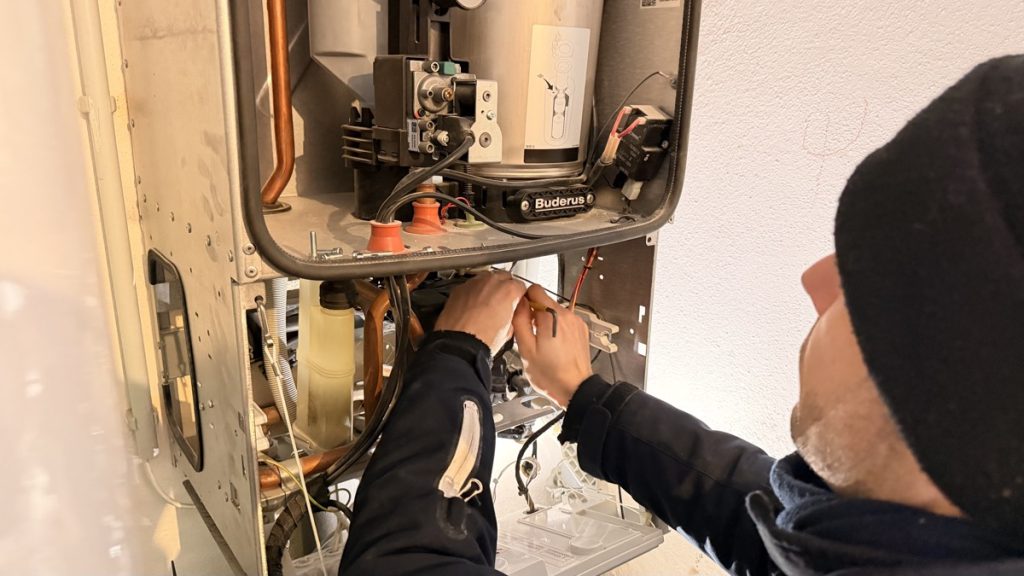
Luxembourg winters hit below -10°C in cold snaps, and unprepared plumbing costs thousands in damage every year. This autumn checklist takes an afternoon and prevents the most common winter plumbing disasters — frozen pipes, boiler breakdowns in January, and water heater failures right when you need them most.
When to do this — late October to early December
Ideal window: before the first frost but after the summer heat. Mid-November in Luxembourg is the sweet spot — most tradespeople are not yet overwhelmed, and you still have time to respond to issues before winter demand.
The 10-point autumn checklist
1. Book your annual boiler service
If not already done this year, book now. Winter is peak demand — service companies fill up fast in November. A pre-winter service catches the issues that would otherwise leave you cold on the coldest day. See our boiler maintenance guide.
2. Check boiler pressure and bleed radiators
Top up to 1.5 bar cold. Bleed each radiator starting with the furthest from the boiler. Gurgling during bleed = lots of air to evacuate. A heating system with trapped air is less efficient and noisier.
3. Test the heating on a cool evening
Turn the heating on for an hour and walk through every room. Feel each radiator top and bottom:
- Top cold + bottom warm = air (bleed)
- Top warm + bottom cold = sludge (need power flush, on request)
- All cold on one radiator = stuck TRV or closed valve
- Knocking / banging sounds = investigate before they get worse in peak use
4. Insulate exposed pipes
Walk the basement, garage, and utility room. Any metal or plastic pipes visible in unheated spaces should be sleeved with foam insulation (on request per meter, bricolage). Focus on:
- Basement cold water supply near the meter
- Outside tap (robinet de jardin) feed pipe
- Pipes running through cold corners or along external walls
- Any pipe you can see your breath near in winter
5. Drain and isolate external taps
Close the interior isolation valve (usually in the basement) feeding the outside tap. Then open the outside tap to let any trapped water drain. Disconnect and store hoses.
If you don’t have an interior isolation valve: consider having one installed. Cost: on request. Pays for itself the first winter it prevents a burst.
6. Check the main stopcock works
Find the main shutoff. Turn it off, test that water stops at a tap, then turn back on. Stuck valves are common — if it’s stuck closed or open, you can’t respond to emergencies. A plumber can replace for on request.
Everyone in the home should know where the stopcock is and how to use it.
7. Inspect water heater / DHW tank
- Check for rust or corrosion at the bottom (sign of early tank failure)
- Test the temperature and pressure relief valve (manual lever — lift briefly, should release water, then reseal)
- Check the anode rod if accessible (should be replaced every 3-5 years)
- Verify the temperature is set to 55-60°C (too low = legionella risk, too high = scale)
8. Prepare for holiday absence
If you travel over the holidays, set:
- Heating to frost protection mode (or 10-12°C minimum) — not off
- Water heater: your choice to leave on or turn off depending on duration
- Close the main water stopcock if leaving for more than a week
- Drain outside taps if not already done
- Consider a smart leak sensor (on request) for peace of mind
Extended absence without heating can drop home temperature below freezing in extreme cold, leading to burst pipes. Even minimal heating (8-10°C) prevents this.
9. Stock basic emergency supplies
Keep in an accessible drawer:
- Radiator bleed key (on request)
- Pressure gauge or at minimum, the knowledge of what your boiler pressure gauge should read
- Phone number of your preferred plumber (24/7 line if available)
- Water meter location note
- Main stopcock location note
- Your boiler brand/model/install date on a piece of paper taped inside the boiler cover
10. Review insurance
Check your home insurance policy includes:
- Dégât des eaux coverage — mandatory baseline, but check the deductible
- Water heater replacement if tank fails
- Gel / freeze damage — sometimes excluded, especially for unoccupied properties
Update if needed. Premium increase is usually modest but saves thousands in a claim.
Winter’s Top 5 plumbing emergencies in Luxembourg — preventable?
1. Frozen and burst pipes
Preventable: Insulate exposed pipes, keep minimum heat, drain outside taps. See frozen pipes guide.
2. Boiler refusal to start on first cold snap
Preventable: Annual service caught the issue.
3. Water heater failure / no hot water
Partially preventable: Pre-season inspection spots corrosion, relief valve issues. But unit at end of life may just fail.
4. Radiator not heating entire rooms
Preventable: Bleed and test pre-winter. Sludge issues identified allow for flush before peak demand.
5. Pressure drop below threshold, boiler locks out
Preventable: Top up to 1.5 bar in autumn, check weekly during heating season.
Cost of pre-winter prep vs winter emergency
- Full autumn prep (DIY + annual service): on request
- Typical winter emergency call-out: on request for the visit + parts
- Frozen pipe repair + water damage: on request 000-on request 000 (often covered by insurance, but with deductible and hassle)
Autumn prep pays for itself dramatically when it prevents even one emergency.
Frequently asked questions
I’m renting — should I do any of this?
Yes for things in your control (bleeding radiators, monitoring pressure, reporting issues). Your landlord should handle the annual service, but verify it’s been done. See tenant rights guide.
How much water pressure should I have in winter?
Same as summer — 1.2 to 1.8 bar cold. Some boilers set lower in summer due to less expansion, so check cold and topped up to 1.5 bar going into heating season.
Should I leave the heating on all the time in winter?
Set-back is fine (lower temperature at night / away from home), but don’t turn heating completely off when it’s cold outside. Frost protection mode (usually 5-8°C) keeps pipes safe without heating a full house.
Need a plumber at your Luxembourg home?
Weber & Fils has English-speaking technicians for 24/7 call-outs across the Grand Duchy: weberetfils.lu/en or call +352 20 60 22 22.
Weber & Fils — 24/7 boiler repair, maintenance and installation.
Request heating service → | +352 20 60 22 22