
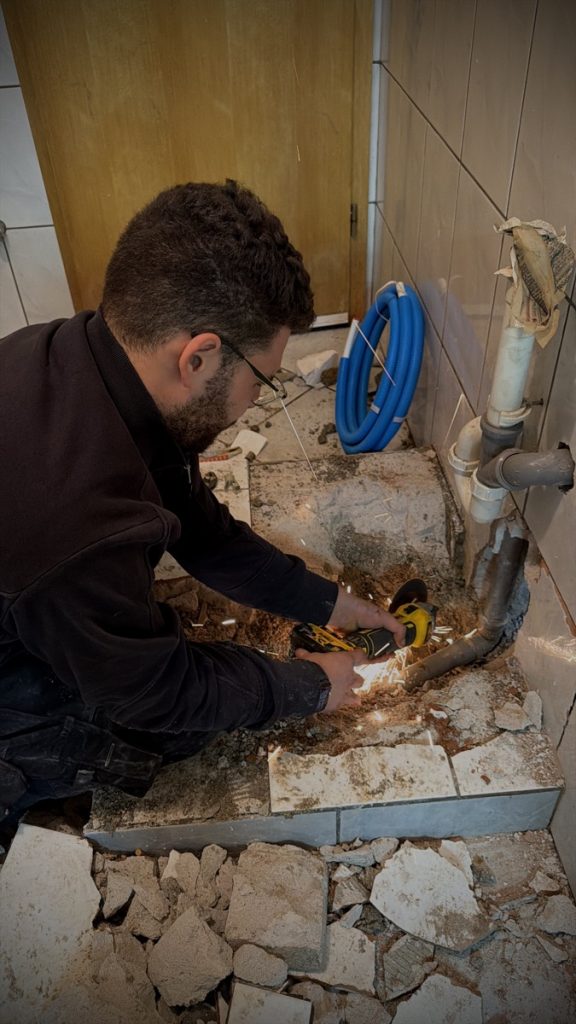
A burst pipe while you’re at work can dump thousands of litres and cause on request 000-on request 000 of damage before you come home. Smart leak detection and automatic shutoff systems cost on request 500 and can prevent most water-damage disasters. This guide covers what’s available, how it works, and what insurance rebates are possible in Luxembourg.
Three levels of smart water protection
Level 1 — Spot leak sensors (on request per unit)
Wireless battery-powered sensors placed under sinks, behind toilets, next to water heaters, in basements. When they detect water, they sound an alarm and send a phone notification.
Pros: cheap, easy install (no plumbing), covers known-risk spots
Cons: only alerts — you still need to shut off water yourself, limited coverage (only where sensors are placed)
Best for: apartments, supplementing an existing setup, identifying specific leak-prone areas
Level 2 — Inline flow monitors (on request)
Installed in-line on your main water pipe. Continuously measures flow. Detects anomalies — e.g., constant low flow at 3am suggests a leak.
Pros: covers whole home, detects silent leaks early, tracks water usage
Cons: requires plumber to install (on request), learning period to calibrate your « normal » patterns
Best for: homeowners wanting comprehensive monitoring
Level 3 — Automatic shutoff valves (on request 500)
Combines flow monitoring with a motorized valve on your main supply. Detects a leak → automatically closes the water. No human action needed.
Pros: maximum protection, can prevent disaster while you’re away or asleep
Cons: highest cost, occasional false positives (can close during unusual legitimate use), requires battery backup for power outages
Best for: second homes, frequent travelers, high-value homes, owners with previous water damage history
Popular systems available in Luxembourg
Spot sensors
- Shelly Flood / Aqara Water Leak Sensor — on request each, WiFi or Zigbee, app notifications
- Netatmo Smart Smoke + Water — combined smoke/water detector, on request
- Fibaro Flood Sensor — Z-Wave, premium build quality, on request
Flow monitors
- Grohe Sense Guard — on request + install, continuous monitoring
- Moen Flo / Flo by Moen — comprehensive monitoring + learning, on request + install
- Phyn Plus — uses pressure wave fingerprinting (advanced), on request
Automatic shutoff valves
- Grohe Sense Guard (with shutoff) — market leader in Europe, on request 200 + install
- Kohler H2Wise — premium tier, on request 000-on request 500
- LeakSmart — US-origin but available in LU, on request 100
Installation considerations in Luxembourg
Power requirements
Most flow monitors and shutoff valves need a 230V outlet near your main water meter. If you don’t have one, an electrician install is on request on top of plumbing.
Compatible pipe sizes
Most residential Luxembourg homes have DN20 or DN25 main inlets. All major smart systems support these sizes.
Location constraints
The inline device must be installed on the main water supply before any branches — usually right after the main shutoff valve or water meter. If your meter is in an inaccessible location, installation becomes harder.
Wi-Fi coverage
All smart systems need reliable Wi-Fi at the basement/meter location. Mesh systems or extenders may be needed in larger homes.
Costs in Luxembourg (2026)
Full automatic shutoff install (turn-key)
- Device (Grohe Sense Guard typical): on request 000
- Plumber install: on request
- Electrician (if outlet needed): on request
- App setup and testing: on request (included in plumber time usually)
- Total: on request 000-on request 550
Flow monitor only (no shutoff)
- Device: on request
- Install: on request
- Total: on request
Spot sensor pack (4 sensors for an apartment)
- Sensors (4 × on request): on request
- Self-install: on request
- Total: on request
Insurance rebates
Some Luxembourg home insurers offer 5-15% premium discounts for certified leak-detection systems. Check with your insurer:
- Qualifying systems: usually need VdS-certified or equivalent leak detection
- Installation proof: plumber invoice + device commissioning certificate
- Monitoring: some insurers require the system to be active with notifications enabled
Typical household insurance: on request/year. 10% discount = on request/year. Payback period on a on request 000 system: 22-40 years based on insurance alone — but the real payback is preventing a single major damage event.
Real-world scenarios
Scenario 1: Washing machine hose burst at 3am
- Without system: 8 hours of water spilling, on request 000-on request 000 damage to flooring/ceiling below
- With spot sensor: alarm wakes you, you shut off water manually, limited damage
- With automatic shutoff: water cuts within 30 seconds, minimal damage
Scenario 2: Silent leak in bathroom wall
- Without system: discovered after weeks/months, wall damage, mold
- With flow monitor: anomaly detected within days, repair cheap
Scenario 3: Vacation home, pipe bursts while away
- Without system: disaster on return — weeks of water damage
- With automatic shutoff: damage limited to first burst event, rest of home dry
Setup best practices
- Mount spot sensors in places most likely to leak first: under sinks, behind toilets, next to water heater, near washing machine, basement
- Test the system after install — simulate a leak (pour a small cup of water on a sensor)
- Configure app to multiple family members’ phones (redundancy)
- Enable « vacation mode » when traveling — tighter detection thresholds
- Check batteries annually (spot sensors) — most last 2-3 years
- Firmware updates — apply promptly, usually via app
Frequently asked questions
Will these systems false-positive on a long bath filling?
Smart systems learn your patterns. A 20-minute bath fill is normal for most families — the system recognizes this after a week or two of learning. Automatic shutoff systems typically allow legitimate long flows but trigger on continuous low flow (classic silent leak pattern).
Does the system still protect me if the Wi-Fi goes down?
Yes — the device operates autonomously. Flow monitoring and shutoff still work. You just don’t get remote notifications. Batteries in shutoff valves last 6-12 hours on backup.
Can tenants install these?
Spot sensors yes (no plumbing change). Flow monitors and shutoff valves usually need landlord permission since they modify the main supply. Some landlords welcome them — insurance advantages can be shared.
Need a plumber at your Luxembourg home?
Weber & Fils has English-speaking technicians for 24/7 service across the Grand Duchy: weberetfils.lu/en or call +352 20 60 22 22.
Weber & Fils — 24/7 emergency plumbing, leak repair, drain unblocking.
Request plumbing service → | +352 20 60 22 22