
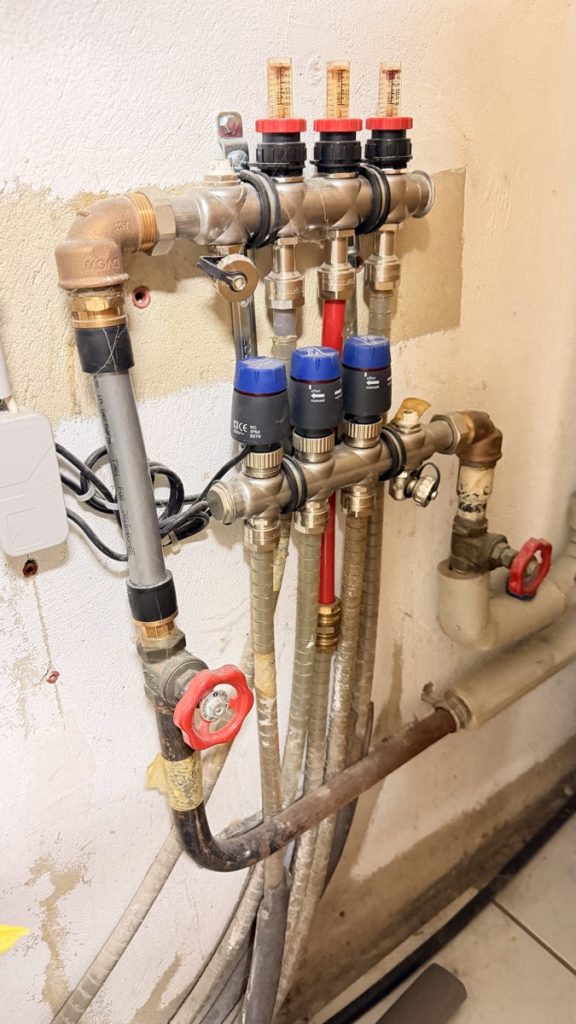
Luxembourg winters regularly dip to −5 to −15°C. A frozen pipe that cracks and then thaws can dump thousands of litres into your walls or floors before you notice. This guide covers how to prevent freezing in the first place, spot the early signs, and thaw a frozen pipe safely — without making it worse.
Why pipes freeze in Luxembourg
Pipes freeze when the water inside drops below 0°C for long enough. Common situations in Luxembourg homes:
- Unheated basements with exposed supply pipes
- Attic water tanks or pipes in uninsulated roof spaces
- Garage water outlets (common for washing cars)
- External taps (robinet de jardin) left connected to a hose
- Empty holiday properties with heating turned off
- Poorly insulated external walls with embedded pipes
- Pipes running across crawl spaces or unheated extensions
Luxembourg building codes since 2000 require minimum insulation, so newer properties rarely freeze. Homes built before 1990 are the main risk zone.
Prevention — before the cold snap arrives
In autumn (late October to early December)
- Disconnect and drain garden hoses. Close the outside tap’s isolation valve (usually inside the basement) if your installation has a dedicated one. Open the outside tap to let any residual water drain.
- Insulate exposed pipes with foam sleeves (available at bricolage, on request per meter). Focus on basement, garage, and external wall sections.
- Check heating works in unused rooms — cold spots in the home accelerate freezing.
- Service the boiler so it runs reliably through winter. See annual service guide.
- Top up the heating circuit pressure to 1.5 bar cold.
During winter
- Keep interior temperature above 12°C even in unused rooms.
- Open cabinet doors under sinks on external walls during very cold nights — lets warm room air reach the pipes.
- Let a tap drip slightly during extreme cold (below −10°C). Moving water is far less likely to freeze than still water.
- Don’t fully turn off heating when away — set to minimum 10-12°C with a night-setback schedule.
For holiday absences
If you’re leaving for more than 3-4 days in winter:
- Set heating to 10°C minimum (frost protection mode)
- Close the main water stopcock
- Drain taps by opening the lowest one briefly
- Consider a smart thermostat or leak-detection sensor for remote monitoring
- Ask a neighbour to check the property after extreme cold events
Early warning signs
- Tap produces only a trickle or nothing — partial or full freeze
- Strange creaking or cracking sounds in pipes — ice expanding
- Unusual frost on visible pipe surfaces
- One room with cold pipes, another normal — localized freeze
- Toilet won’t refill after flushing — supply pipe frozen
Safe thawing — step by step
Step 1: Close the main stopcock
Critical. A frozen pipe has often already cracked. When the ice melts, water gushes out. If the stopcock is closed, pressure is limited to whatever’s upstream.
Step 2: Open the affected tap
Open the tap downstream from the frozen section. This lets the melting water escape and releases pressure during thawing. You’ll hear water start to flow when the thaw progresses.
Step 3: Gently warm the frozen section
Start warming from the tap end and work back toward the frozen area. This lets meltwater escape rather than build up behind ice.
- Good: hair dryer on medium heat, kept moving
- Good: warm towels wrapped around pipes, refreshed every 10-15 minutes
- Good: space heater placed in the room, door closed
- Good: gentle heating pad for accessible pipes
- BAD: blow torch or naked flame — can crack pipes from thermal shock, fire hazard
- BAD: boiling water directly on pipe — same thermal shock risk
- BAD: leaving it to thaw on its own — could crack during uncontrolled thaw
Step 4: Watch for leaks as water starts flowing
As ice melts and water resumes flow, check visually along the pipe for any weeping, dripping, or spray. A cracked pipe may not show obvious failure until pressure is back up.
Step 5: Reopen the stopcock gradually
Once water flows normally from the tap, close the tap and slowly reopen the main stopcock. Monitor for 10-15 minutes for any hidden leaks.
When the pipe has already burst
If you find water actively flowing from a pipe:
- Close the main stopcock immediately
- Open all taps to drain the system
- Turn off the electrical supply in the affected area if water is near sockets
- Move valuables away and photograph everything for insurance
- Call a plumber — in Luxembourg, emergency call-outs are 150-sur devis typical but save you from thousands in water damage
- Notify insurance within 5 working days (dégât des eaux clause)
The cracked section usually needs to be cut out and replaced. Copper pipes: the repair takes 30-90 minutes plus refilling and pressure test. PER/multicouche: similar time.
Typical repair costs in Luxembourg
- Simple thaw + diagnosis (no crack): on request if called out by a plumber
- Copper section replacement (visible, accessible): on request
- Hidden burst inside wall / floor: on request 200 (including wall/floor opening and patching)
- Water damage repairs: variable, often on request 000-on request 000+ covered by insurance
- Preventive insulation retrofit of basement pipes: on request depending on scope
Frequently asked questions
My heat pump heated pipe — can that freeze?
The internal heating circuit of a heat pump or boiler is usually glycol-protected or kept circulating, so it rarely freezes. External condensate drain lines on heat pumps CAN freeze — these should be heat-traced or routed to drain into the building.
What if I don’t know where the main stopcock is?
Find it NOW, before you need it. It’s usually in the basement, utility room, or near the water meter. Label it with tape if needed. Every occupant of the house should know where it is.
Is pipe insulation worth it?
Absolutely. Foam sleeves cost on request total for a typical basement run, install in an hour with no tools. Prevents the annual freeze risk and slightly reduces heat loss. One of the highest-ROI DIY jobs for a Luxembourg home.
Smart leak detection sensors — useful?
Yes, especially for second homes or extended absences. on request sensors detect water on floor and can shut off main supply automatically. Insurance sometimes offers premium reductions for homes with certified leak-detection systems.
Need help with your Luxembourg plumbing?
Weber & Fils has English-speaking technicians for bookings, emergency call-outs, and quotes: weberetfils.lu/en or call +352 20 60 22 22 — 24/7.
Weber & Fils — 24/7 emergency plumbing, leak repair, drain unblocking.
Request plumbing service → | +352 20 60 22 22